
Our inaugural Nearshoring & Remote Work Report dives into hiring practices and work trends across US architecture firms for 2026.
This report, compiling internal data from 2025-2026, demonstrates the shifting landscape in nearshore hiring and remote work within the medical industry, providing key insights for practices exploring remote hiring going into 2027.
The main areas of consideration for this report are:
- Remote work practices
- Skilled labor shortage
- Rise of nearshoring
Remote Work
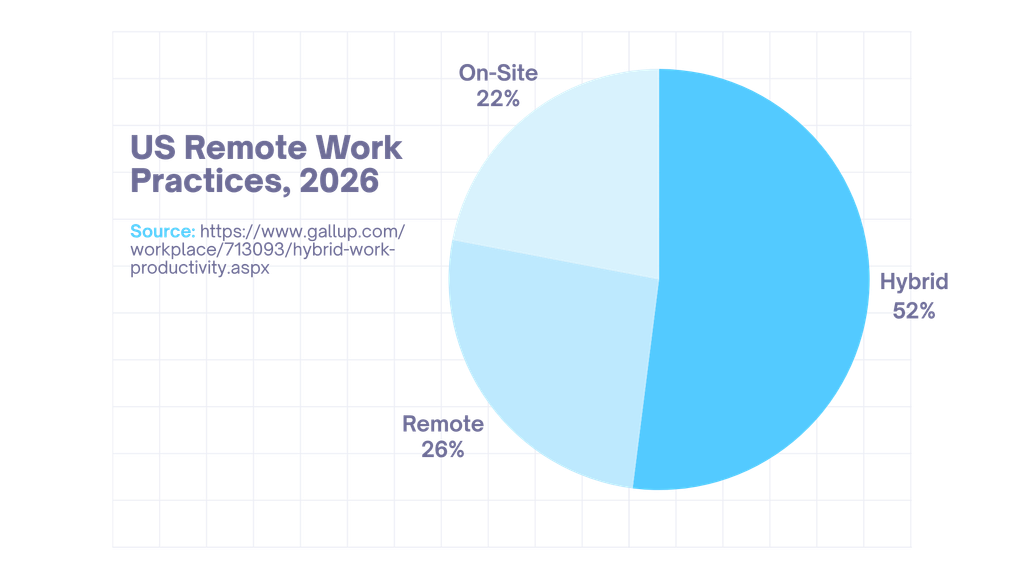
The findings in this report come as other industry publications report a wider trend towards remote work and hiring. Gallup reports that over one-quarter of US employees in remote-capable jobs are now working fully remote, while more than half work in hybrid roles, with at least part of their time spent working from home. Data from FlexJobs shows that in the first quarter of 2026, remote jobs increased by 20% across the board.
Simultaneously, employee sentiment is shifting towards prioritizing remote and hybrid roles. FlexJobs’ 2026 report found that 35% of workers ranked the ability to work remotely as the number one factor when deciding whether to accept a job. A Monster survey shows that a third of participants wouldn’t even consider applying to a job that required them to be in-office full-time.
Labor Shortage
Meanwhile, the US medical industry is facing a significant labor shortage, with McKinsey reporting the United States is short approximately 400,000 nursing and allied health workers and the American Medical Group Association (AMGA) stating that total clinic staff per provider has fallen to 2.17 full-time employees, with the sharpest declines seen in clinical support and ancillary roles.
The labor shortage in healthcare is self-evident, and medical practices are adapting by looking abroad for skilled back office and support professionals.
Rifzan M., Founder
“What we are seeing across our clients is a huge shift, both towards remote-first work culture and nearshoring,” said Rifzan M., Founder of MedicalVirtual. “The labor shortage in healthcare is self-evident, and medical practices are adapting by looking abroad for skilled back office and support professionals.
“And since they’ve already adopted hybrid and remote-first policies, practices are finding it easier and easier to accommodate nearshore employees in their everyday workflows.”
LATAM Nearshoring
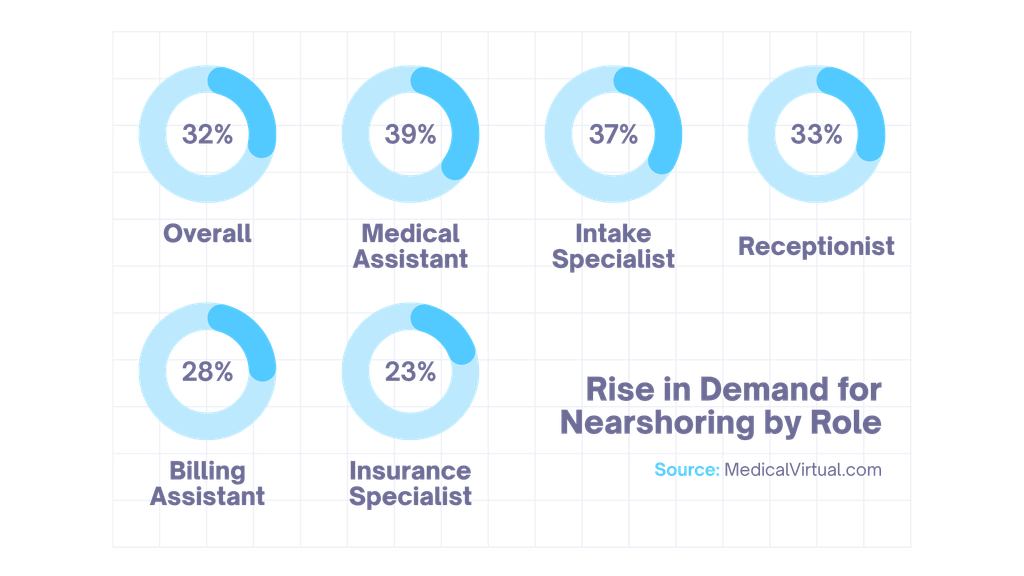
According to MedicalVirtual’s internal data, 2026 has seen a 32% rise in demand for remote medical support professionals such as medical assistants and administrators, as practices look to counteract local skilled labor shortages with nearshore talent. They report the most commonly outsourced roles for 2026 include medical virtual assistants, intake specialists, receptionists, billing assistants and insurance specialists.
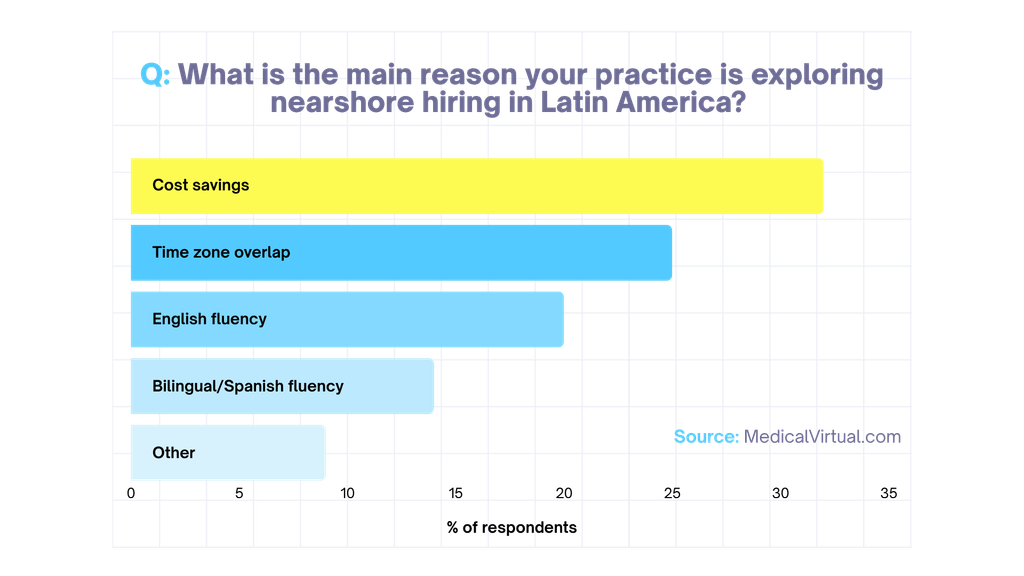
The data indicates that Mexico, Brazil and Argentina are the most popular choices for nearshore hiring among medical practices in 2026, followed by Colombia, Peru and Chile. Participants cite strong time zone overlap and bilingual English-Spanish fluency among their highest priorities, with the latter helping practices to service the 44.9 million native Spanish speakers living in the US (US Census Bureau).
When asked about why they sought to hire in Latin America more generally, respondents reported that they valued the region’s high rates of C1-C2 English fluency, close cultural compatibility, shared time zones, and strong technological and educational infrastructures to support a highly skilled, remote-capable workforce.
Wondering how remote staffing could work for your practice?
Book a free consultation with MedicalVirtual today →