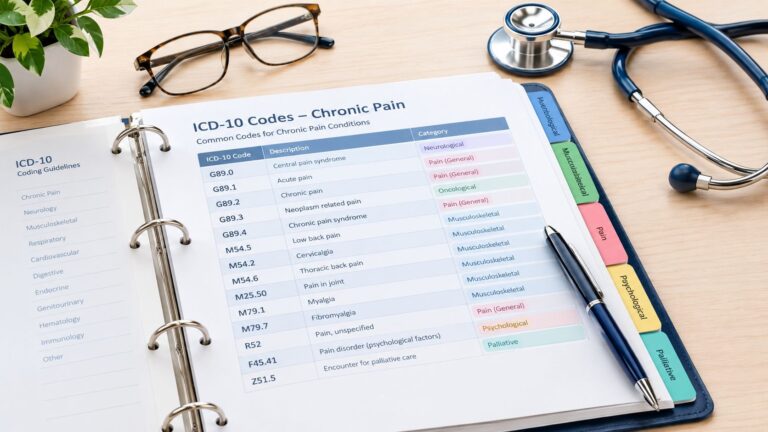

Nearly 94% of physicians say prior authorization delays access to necessary care, and 93% say it can negatively affect outcomes, so this is not a paperwork nuisance, it's a treatment-delivery problem AMA prior authorization burden data. For practice managers, the key question in how to get prior authorization for medication is whether your team can route the request correctly, document it completely, and keep it moving after submission. If the workflow is sloppy, the patient waits. If the workflow is disciplined, the medication gets through faster and your staff spends less time rescuing avoidable denials.
Medication prior authorization works best when it's treated like a tracked operational process, not a one-time form. That means verifying the benefit, gathering the right clinical evidence, submitting through the correct channel, watching deadlines, and appealing denials with a focused medical-necessity case. It also means deciding who on your team owns each step, especially if you use remote staff or a virtual prior authorization specialist. The practices that do this well don't just send requests. They manage a queue.
The Operational Reality of Medication Prior Authorization
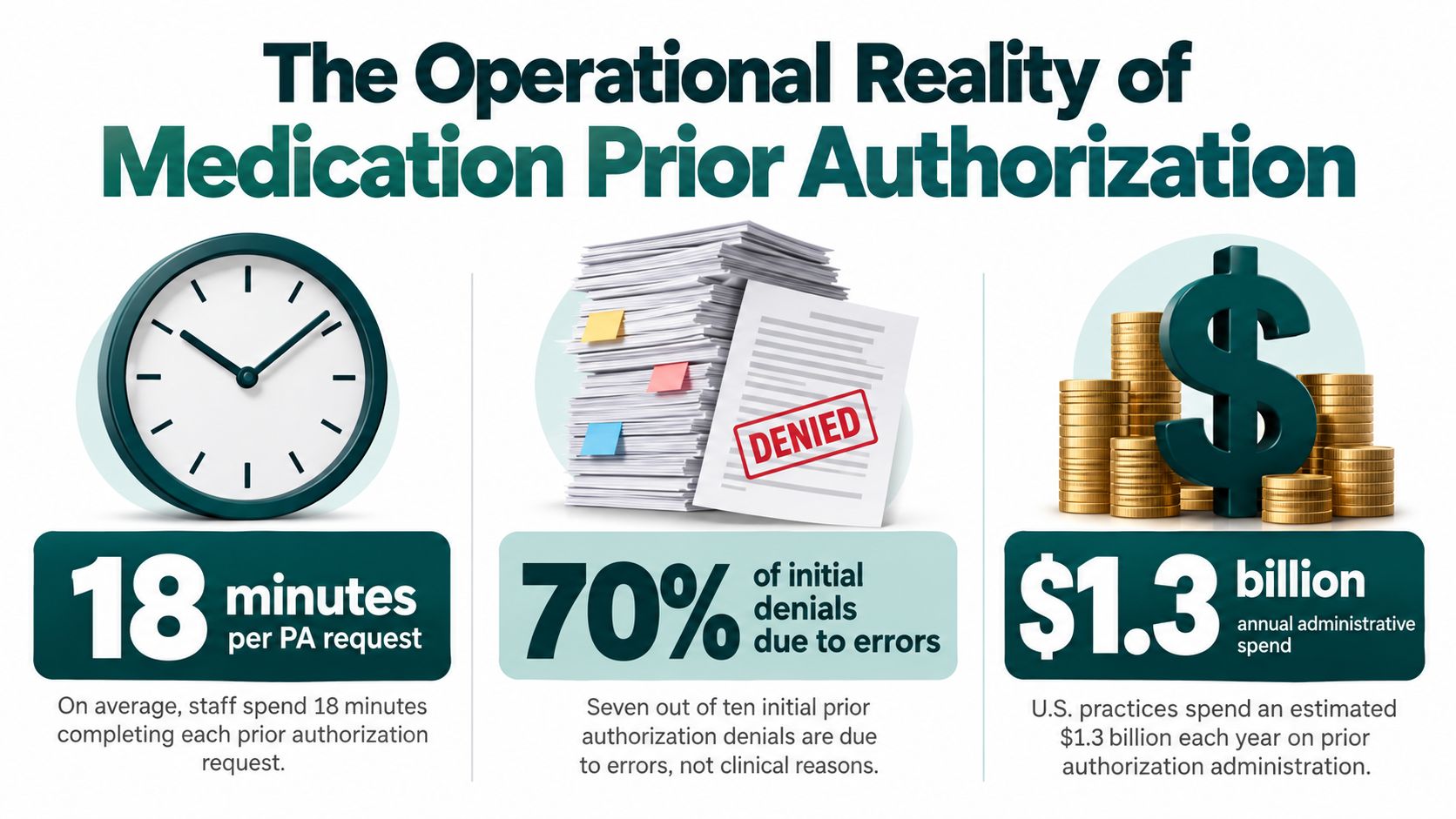
Medication prior authorization sounds simple until it lands in the middle of a busy day. A prescriber orders the drug, a staff member has to confirm the benefit path, someone else has to collect notes, and then the request sits until a payer responds, asks for more information, or denies it. That's why treating prior auth as a quick admin task usually backfires. The process is really a cross-functional workflow that touches the prescriber, pharmacy, patient, and payer portal or phone queue.
The burden is large enough to change staffing decisions. Practices report spending about 14 hours per week on prior authorizations, and one AMA survey found an average of 33 prior authorizations per physician each week AMA staffing burden survey. CMS has also described the old paper-based process as one that can drag on for days or even weeks, which matches what many practices see when requests are faxed, re-faxed, and chased by phone CMS prior authorization modernization blog.
Practical rule: if prior authorization lives in everyone's inbox, it really belongs to no one.
Why delays become clinical problems
The clinical risk isn't abstract. Nearly one-quarter, 24%, of physicians reported that prior authorization contributed to a serious adverse event for a patient in their care, including hospitalization, disability, permanent bodily damage, congenital anomaly, or death AMA burden data. That's why the best workflows start with urgency, not paperwork. If the medication interruption could cause harm, the request needs expedited handling, not a casual queue position.
For managers, the lesson is straightforward. You need one place where every medication request is logged, one owner who checks status, and one escalation path when the payer stalls. That's the operational difference between a practice that handles prior auth and a practice that gets trapped by it.
For a plain-language overview of the request lifecycle, this internal guide on how prior authorization works is a useful companion for staff training.
Pre-Submission Verification and Benefit Routing
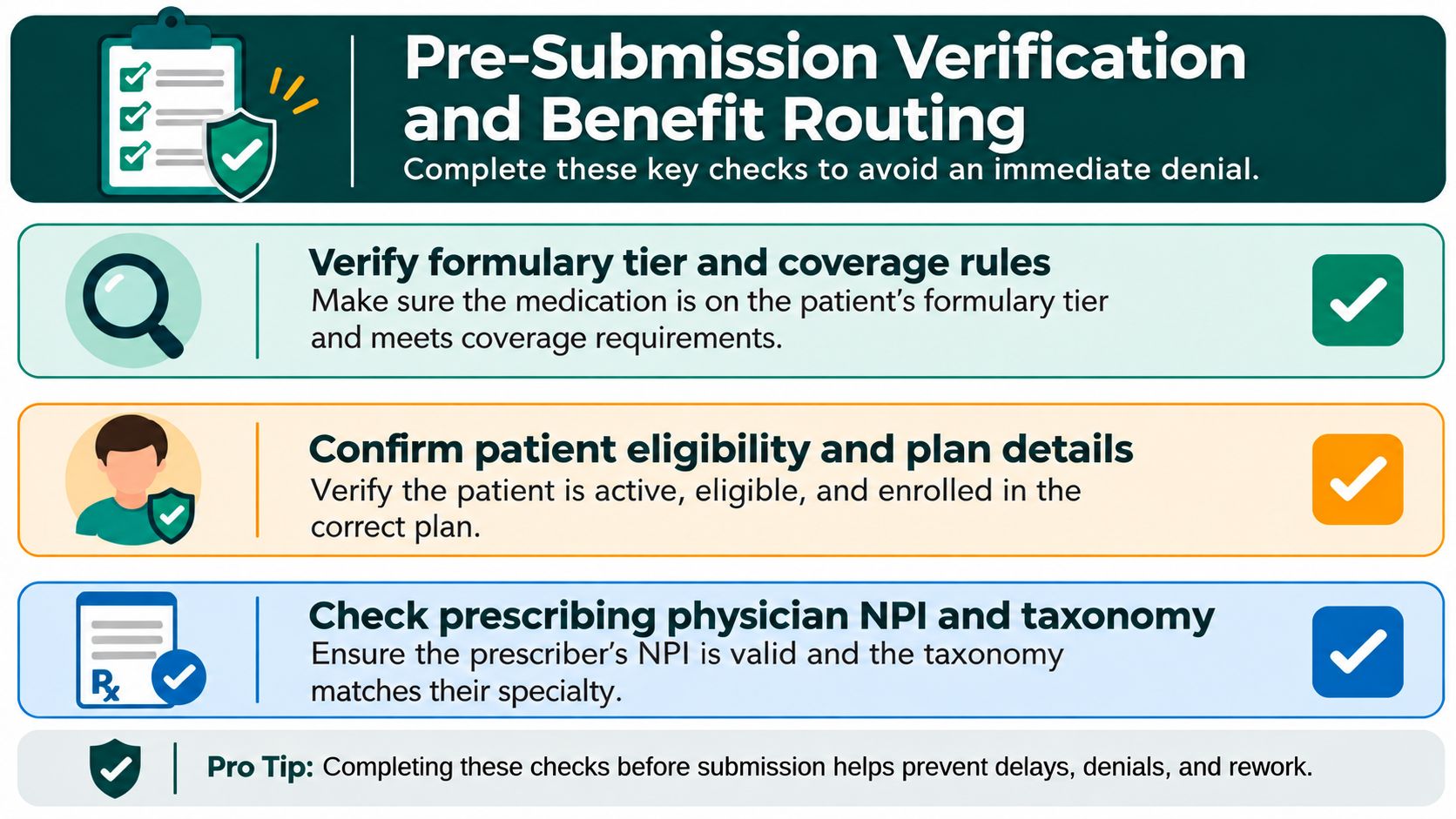
The fastest way to lose time is to send the request to the wrong place. Medication authorizations may sit under the pharmacy benefit, the medical benefit, or a PBM channel that isn't obvious from the chart. Patients often don't know the difference, and front-desk staff usually shouldn't guess. Before anyone submits, verify the plan, the benefit route, and the medication rules that apply to that specific fill.
What to check before the provider signs
Start with active coverage and formulary status. Confirm whether the drug needs step therapy, a quantity limit, or a site-of-care restriction. Then match the prescribed drug to the payer's accepted naming convention, because a mismatch between the medication name in the chart and the name in the benefit system can slow the request down or trigger avoidable follow-up.
A clean submission usually includes these items:
- Correct coverage path: confirm whether the request belongs with the medical plan, the pharmacy benefit manager, or a specialty pharmacy channel.
- Exact drug details: document the drug name, strength, dose, route, frequency, and intended duration.
- Clinical diagnosis: use the payer's accepted ICD-10 code and make sure it matches the request.
- Supporting evidence: attach chart notes, prior treatment history, relevant labs, imaging, contraindications, and proof of failed or intolerable alternatives.
- Submitting provider data: verify the physician NPI and taxonomy so the payer doesn't reject the file for basic mismatch issues.
Many practices lose momentum at this stage. If the initial packet is thin, the payer asks for more, and the request becomes a back-and-forth exercise instead of a submission. A remote insurance verification or prior authorization coordinator can handle the checking and gathering, but the prescriber still has to supply the clinical justification.
For a practical intake workflow, this insurance verification form is relevant because benefit checks and prior auth preparation often happen in the same workstream.
The best authorization packet is the one that answers the payer's questions before the payer asks them.
Submission Channels and Active Queue Monitoring
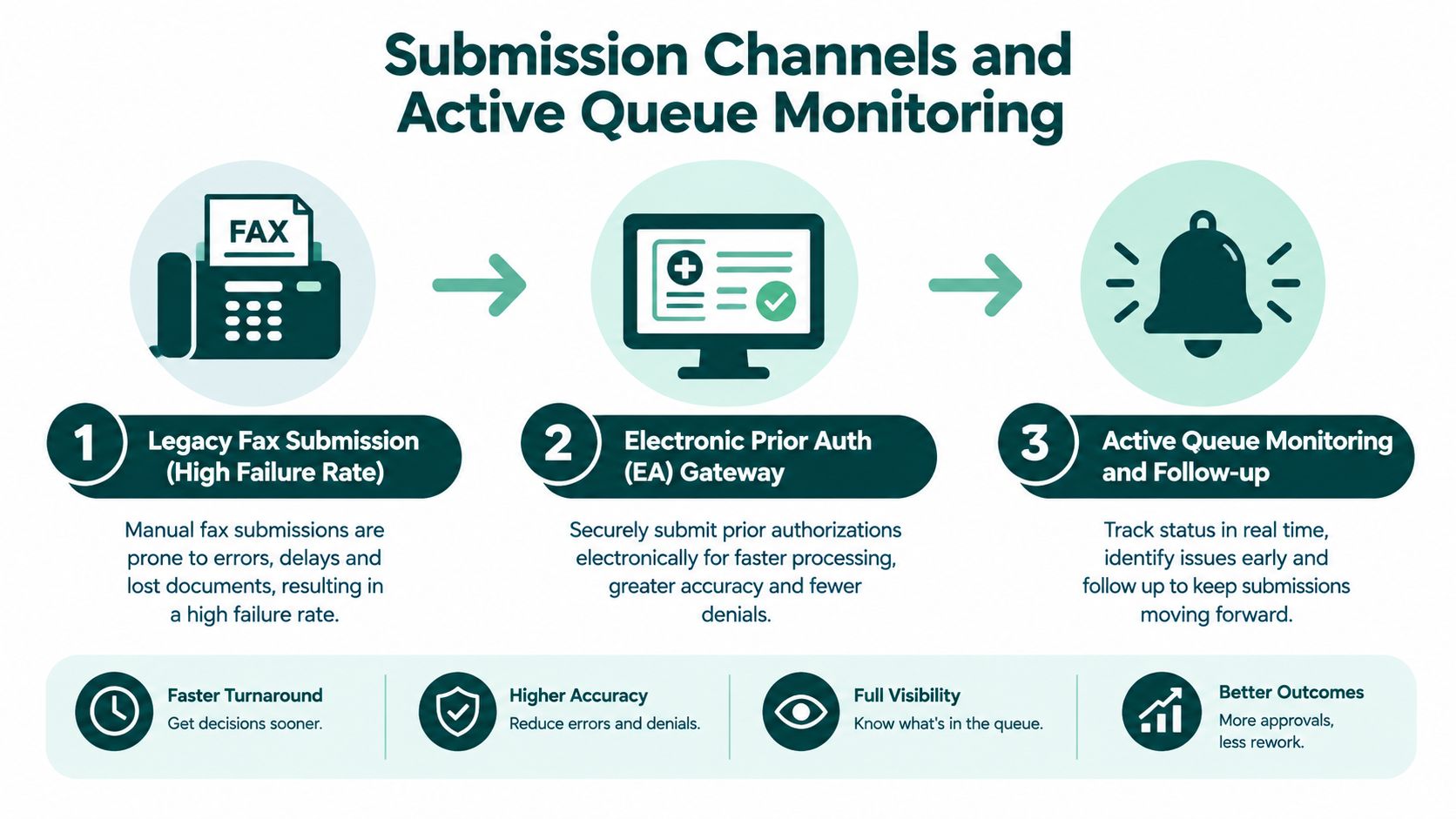
Submitting the request is only the midpoint. A 2022 federal health-technology fact sheet reported that only 28% of prior-authorization transactions were fully electronic, and CMS's 2024 interoperability rule requires certain impacted payers to maintain a Prior Authorization API for electronic prior authorization of covered items and services MedPAC report on electronic prior auth and CMS rule. That matters operationally because electronic submission is helpful, but it doesn't eliminate missing notes, policy checks, or follow-up tasks.
Build the queue, not just the submission
Every request should be logged with the submission date, payer reference number, medication, dose, expected response deadline, and renewal or expiration date. Once that's in place, someone has to watch the queue daily. If the payer asks for additional information, the response window can't sit in a general inbox while the patient waits.
A strong queue system tracks:
- Confirmation number and channel used.
- Standard or expedited deadline.
- Any request for extra documentation.
- Whether the pharmacy hit a fulfillment block.
- Next escalation step if the deadline passes.
That structure matters because a submission without monitoring can expire unnoticed. Practices that rely on fax or passive inbox management often discover the problem only after the patient calls for an update. A remote prior authorization specialist can make this less chaotic by checking payer portals, uploading missing records, and calling when the case needs a status nudge.
For staffing context, this internal page on prior authorization specialist support is relevant if you're deciding who should own the daily queue.
Overturning Denials Through Structured Appeals
A denial is not the end of the case. It's a signal that the payer didn't get enough of the right information, or that the policy criteria weren't matched clearly enough. In 2023 Medicare Advantage data, plans received more than 50 million prior-authorization requests and fully or partially denied 3.2 million. Only 11.7% of those denials were appealed, yet 81.7% of appealed denials were fully or partially overturned MedPAC 2024 report. That's a strong operational argument for treating denials as escalation events instead of dead ends.
How to read the denial correctly
Don't start by rewriting the whole chart. Start by identifying the reason category. Is the issue missing clinical documentation, a coding mismatch, lack of step-therapy history, a naming problem between the drug and the benefit channel, or a real noncoverage decision? Each one needs a different fix.
| Common Medication Denial Reasons and Correction Strategies | |
|---|---|
| Denial Reason | Root Cause |
| Missing chart notes or lab results | The packet lacked objective evidence the payer needed |
| Incorrect drug or benefit channel | The request went to the wrong entity or used the wrong naming convention |
| Step therapy not documented | Prior treatment history wasn't clearly tied to the policy |
| Quantity or duration mismatch | The request didn't match the coverage rules |
| Coverage not active | The patient's plan details were outdated or incorrect |
| Correction Strategy | Action |
|---|---|
| Complete the record | Add the missing chart note, lab, or prior treatment history |
| Route correctly | Resubmit through the correct payer or PBM channel |
| Tighten the necessity statement | Align diagnosis, severity, and failed alternatives with the policy language |
| Fix the order details | Match quantity, duration, and dispensing channel to the approval criteria |
| Confirm eligibility first | Verify active coverage before the next submission |
What a strong appeal actually says
The appeal should be short, specific, and tied to policy criteria. Include the diagnosis, severity, prior therapies and outcomes, risks of delay, the requested regimen, and why the preferred alternative isn't suitable. If delay could seriously jeopardize health, request expedited review rather than waiting in the standard queue.
A good appeal doesn't argue sentiment. It closes the documentation gap.
The common failure here is treating appeals as optional because the staff is busy. That's how approvable cases get abandoned. A tracked appeal process, with deadlines and confirmation of receipt, keeps the request alive long enough to be overturned.
Scaling Your Workflow with Remote Authorization Specialists
Prior authorization work is repetitive, deadline-driven, and easy to interrupt if it's handed to whoever happens to have a free minute. That's why many practices eventually move this work to a dedicated remote specialist or virtual medical assistant. The role isn't clinical, and it shouldn't be. Its value is in consistency, follow-through, and keeping the queue from slipping while nurses and providers focus on patient care.
What the remote role should handle
A well-scoped specialist can manage form completion, payer portal work, status calls, documentation uploads, and appeal tracking. They can also keep the queue current by flagging requests that need a clinician's signature, an added note, or a corrected medication detail. In practices with heavy medication volume, that separation reduces the chance that an urgent request sits untouched because everyone assumed someone else was watching it.
This is also where communication discipline matters. Use secure, HIPAA-aligned channels, define who can approve clinical statements, and make sure the specialist knows when to escalate rather than improvise. Remote staff should collect, route, and track. Providers should decide on the medical language when the payer needs justification.
For practices exploring outside help, MedicalVirtual places pre-vetted Latin America-based medical virtual assistants who work U.S. clinic hours and can be scoped for prior authorization support, insurance verification, and billing follow-up. That kind of role fit matters more than generic admin experience because the workflow depends on payer-specific detail, not just general office skills.
How to decide if the model fits your practice
Start by measuring your own volume. Count how many medication authorizations come in each week, how many get denied, how often renewal requests repeat for chronic therapy, and how much time your in-house team spends chasing status. Then decide whether the work needs full-time coverage, part-time coverage, or a shared model.
A simple decision filter helps:
- High denial volume: dedicate a specialist to appeals and documentation follow-up.
- Frequent chronic-medication renewals: keep the queue active so stable patients don't stall.
- Multiple payers and PBMs: use someone who can follow different routing rules without confusion.
- Small practice with limited staff: offload the repetitive work before it crowds out front-desk or nursing duties.
The trade-off is control versus capacity. Keeping the work in-house gives you direct visibility, but it also competes with everything else on the team's plate. A remote specialist adds structure and endurance, which is usually what medication prior authorization needs most.
The Takeaway
Getting prior authorization for medication is mostly about process discipline. Verify the benefit route before submission, attach the right clinical evidence, watch the request after it leaves your office, and treat denials as fixable documentation events rather than final answers. The practices that do this well don't rely on memory or goodwill. They run a queue.
If your team is still handling medication prior auth ad hoc, audit the last week's requests. Check how many were routed correctly on the first try, how many needed extra documentation, and how many sat without follow-up. If the work is pulling clinicians and front-desk staff off their core tasks, a dedicated remote specialist is worth considering.
MedicalVirtual places pre-vetted remote healthcare assistants who can handle medication prior authorization support, insurance verification, and appeal follow-up during U.S. clinic hours. If you want to reduce stalled requests and keep treatment moving, visit MedicalVirtual to review how their staffing model fits a prior authorization workflow.